Skip to content
Home/Projects/AI Voice System
Case study · 13 / 39
Realtime voice · Twilio automation

Realtime AI voice calls with latency under two seconds.

A low-latency voice system that combines streaming telephony, turn detection, entity extraction, and observability for production conversations.

[ Client review ]

The voice system moved from a slow demo to a production-ready conversation loop.

Product team
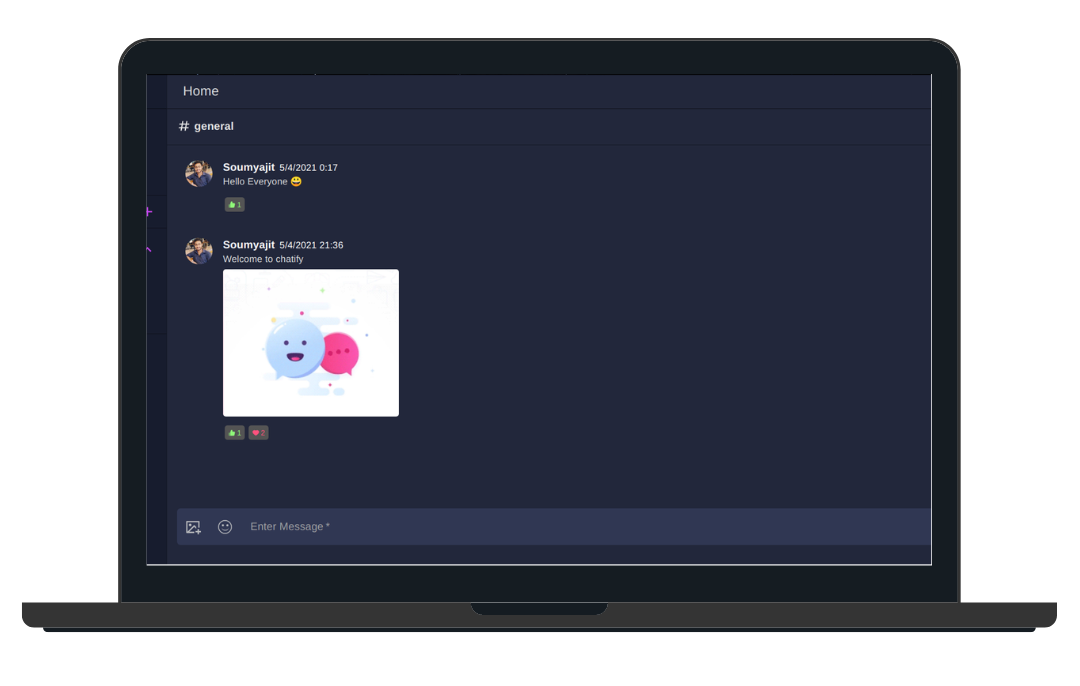
AI Voice System source visual showing a chat and call interface
Select case study
CS / 13AI Voice SystemRealtime voice · Twilio automation
CS / 01ThalamusDocument automation · Knowledge searchCS / 02AletheiaVoice AI · Video reviewCS / 03FRCMConstruction contracts · Review automationCS / 04RetinaRetail forecasting · Python automationCS / 05CrayoAI video · Short-form automationCS / 06MusicfyGenerative audio · Voice cloningCS / 07Just ListenAudiobooks · Subscription audioCS / 08Study PotionEducation AI · Study automationCS / 09GoMoon.aiTrading analytics · Economic calendarCS / 10RevanaAI support staff · Sales automationCS / 11TrailblazerSEO · Content growthCS / 12CoversaIQCall center AI · Agent coachingCS / 13AI Voice SystemRealtime voice · Twilio automationCS / 14Resume ScreenerRecruiting agents · OCR workflowCS / 15Document OCRHybrid search · OCR pipelinesCS / 16Credit ScoringRisk modeling · Explainable MLCS / 17Content SafetyVision AI · RecommendationsCS / 18AI Inbox TriageInbox automation · CRM routingCS / 19Invoice PO AutomationFinance extraction · Human reviewCS / 20Meeting CRM AgentSales calls · CRM updatesCS / 21Knowledge AssistantInternal documents · Cited answersCS / 22Healthcare RCM AssistantClaim review · Appeal supportCS / 23Voice Appointment SetterLead qualification · Calendar bookingCS / 24AI Quality GuardrailsPrompt QA · Safety checksCS / 25Spreadsheet DashboardSpreadsheet cleanup · KPI dashboardCS / 26Contract Change MonitorDocument comparison · Policy riskCS / 27Ad Creative GeneratorCreative testing · Ad variantsCS / 28Churn Risk PredictorCustomer health · Retention signalsCS / 29Recruiting Outreach AgentCandidate matching · Outreach draftsCS / 30Retail Shelf IntelligenceShelf monitoring · Restock alertsCS / 31CoreFit Pose CoachCore ML · Pose trackingCS / 32DefectLens QADefect detection · Human reviewCS / 33ModelOps CommandModel monitoring · Retraining alertsCS / 34PrivacyScanCore ML · Local redactionCS / 35AutoLabel StudioAI pre-labels · Human reviewCS / 36FleetCam SafetyDashcam analysis · Driver coachingCS / 37FieldVision SearchField photos · OCR snippetsCS / 38Receipt ScannerExpense capture · Local extractionCS / 39EvalForge BenchModel comparison · Regression testing
Find related work
Choose a workflowChoose a business problemStart with the kind of workflow you want to improve, then see the closest work.
AutomationAutomationsRepeatable work turned into a reliable workflow, dashboard, or internal tool.ChatbotChatbotSupport and internal assistants that answer from the right company material.PythonPython ScriptsSmall scripts that clean data, connect tools, run reports, or power a workflow.MVP SaaSMVP SaaSLean SaaS builds that prove the product, workflow, and buyer story quickly.Voice AIVoice AIVoice, audio, and conversation tools for review, routing, and decision support.DocumentsDocument ReviewContract, PDF, and knowledge-base tools that make buried details easy to act on.AI AgentsAI Agents & Workflow AutomationAgentic systems that classify work, draft actions, route tasks, and keep humans in control.AssistantsAI Assistants & Knowledge ChatAssistants that answer questions from internal context, documents, and tool data.Document AIDocument AI & Knowledge SearchParsing, extraction, OCR, comparison, and retrieval systems for document-heavy work.Voice IntelVoice AI & Conversation IntelligenceVoice, call, and meeting systems that extract next steps, signals, and follow-up actions.VisionComputer VisionAI systems that analyze images, video, screenshots, camera feeds, and inspection data.On-deviceCore ML & On-Device AIMobile AI workflows that run locally for privacy, speed, or offline use.MLOpsMLOps & AI InfrastructureMonitoring, evaluation, versioning, and operations for AI systems in production.ForecastingForecasting & Decision IntelligencePredictive systems that turn business data into risk, demand, revenue, or planning signals.RevenueGrowth & Revenue AutomationAutomation for lead routing, churn prevention, outreach, CRM updates, and sales follow-up.Creator ToolsGenerative Media & Creator ToolsCreative workflows for hooks, scripts, captions, variants, audio, and video production.Risk & EvalRisk, Compliance & AI EvaluationGuardrails, review queues, policy checks, regression tests, and risk-scored AI workflows.Data OpsData Automation & LabelingData cleanup, labeling, validation, KPI reporting, and human review workflows.Edge AIEdge AIAI workflows designed for local hardware, constrained devices, and near-source processing.Health AIHealth/Fitness AIHealth, revenue cycle, fitness, and coaching workflows with careful review boundaries.ManufacturingManufacturing AIInspection, anomaly detection, QA review, and production-floor AI workflows.
Client

AI Voice System

Realtime voice · Twilio automation

Engagement

Product narrative

Voice architecture · latency tuning · observability

Role

AI builder

Realtime voice engineering

Year

2026

Project positioning

Buyer caselatency and reliability outcomes
7s to <2s
Latency reduced

Conversation delay cut sharply

Twilio
Voice transport

WebSocket streaming stack

VAD
Turn detection

Custom speech boundary logic

NER
Extraction

Entities captured during calls

Voice AI fails quickly when the conversation feels slow.

The system started with too much latency for natural back-and-forth. Users had to wait, interruptions were hard to handle, and operations had limited visibility into call quality.

The build needed to improve speed without losing extraction, routing, or production observability.

Transport, speech detection, model calls, and synthesis each add delay unless the loop is designed tightly.

Bad VAD creates interruptions, awkward silences, or repeated responses.

NER had to capture useful information without slowing the reply path.

Debugging calls requires timestamps, traces, and failure modes across the stack.

We treated latency as the product experience, not a backend metric.

The stack was shaped around streaming audio, tighter VAD, faster response orchestration, and NER that could run without blocking the conversation.

Instrumentation made every call easier to inspect: where time was spent, what failed, and which moments needed fallback behavior.

  • Twilio WebSocket voice stack for realtime conversations.
  • Custom voice activity detection for cleaner turn-taking.
  • NER pipeline for capturing useful entities during calls.
  • Latency reduced from 7 seconds to under 2 seconds with observability in place.

Latency-first architecture

Every step was measured against the live conversation experience.

Custom VAD

Turn boundaries were tuned for the call flow instead of generic defaults.

Parallel extraction

NER ran alongside the voice loop where possible.

Streaming transport

WebSocket audio reduced wait time and improved responsiveness.

Observability

Per-call metrics made failures and cost easier to control.

Week 1-2

Latency audit

Measured delay across transport, ASR, LLM, TTS, and handoff points.

Week 2-3

Streaming loop

Reworked Twilio WebSocket handling and call state.

Week 3-4

Turn detection

Tuned VAD and interruption behavior.

Week 4-5

Extraction path

Added entity extraction without blocking the response loop.

Week 5-6

Observability

Instrumented latency, failures, and cost signals.

LatencyResponse time moved from awkward to usable.
90
Call reliabilityStreaming, turn-taking, and retries were hardened.
84
Operational visibilityObservability made call issues easier to debug.
82
Cost controlInfrastructure was tuned for lower runtime waste.
78
[ 01 ] Stream
Voice transport
  • Twilio
  • WebSockets
  • Audio chunks
  • Call state
[ 02 ] Detect
Turn handling
  • VAD
  • Interruptions
  • Silence windows
  • Retries
[ 03 ] Respond
AI voice loop
  • ASR
  • LLM
  • NER
  • TTS
[ 04 ] Operate
Production layer
  • Metrics
  • Logs
  • Fallbacks
  • Cost controls

The voice stack only works when streaming, turn detection, model calls, and observability are designed as one loop. Every extra delay is part of the user experience.

Usable conversation speed: latency dropped from 7 seconds to under 2 seconds.

Production control: custom VAD, NER, metrics, and fallbacks made the system easier to operate under real call conditions.

"

The voice system moved from a slow demo to a production-ready conversation loop.

P
Product team
Sources
  • Phone calls
  • Twilio streams
  • Caller context
  • Knowledge rules
Processing
  • WebSockets
  • VAD
  • ASR
  • NER
Answer layer
  • LLM response
  • Tool calls
  • Fallbacks
  • TTS output
Delivery
  • Live call audio
  • Call notes
  • Alerts
  • Logs
Governance
  • Latency traces
  • Cost controls
  • Escalation rules
  • Call history
Book a call

Got a problem AI might solve? Let's find out.

30 minutes. Free. No NDA needed. You leave with a clear yes-or-no on whether to build — and a one-pager you can forward to your team the same day.

[ Response ]

Within 24 hours

[ Timezone ]

GMT+5 · flexible

[ Discovery ]

Free · no NDA needed

[ Engagement ]

$1,000 / week sprint